Barkline/ Species library/ Birch family/ Betula
Silver birch
Betula pendulaWhite bark, drooping branchlets and diamond-shaped pores you can see from a moving car. It is the first tree to colonise bare ground and the first to die when the canopy closes over it.
Diagnostic characters
Leaf
Leaves 3–7 cm, triangular to diamond-shaped with a long tapering point and a double-serrate margin. Bright light green, hairless, on a slender stalk 2–3 cm long — the stalk is longer than in downy birch.
Bark
White, papery, peeling in horizontal ribbons and marked with conspicuous black diamond-shaped lenticels. The base of old trunks becomes deeply fissured and black, a feature called a bark sock.
Fruit
Not a cone but a hanging catkin that disintegrates in late summer, releasing tiny winged seeds that drift for hundreds of metres. A single tree can release over a million seeds in a good year.
Habit and range
A light, open crown of fine drooping branchlets on a slender trunk, so the whole tree seems to shimmer. In a stand the narrow crowns let plenty of light through to the ground. Almost all of Europe and northern Asia, from Ireland to Japan and from the Arctic treeline south to the Mediterranean mountains. It is one of the first trees to appear after fire, clearfell or abandoned farmland.
Leaf, drawn from the numbers
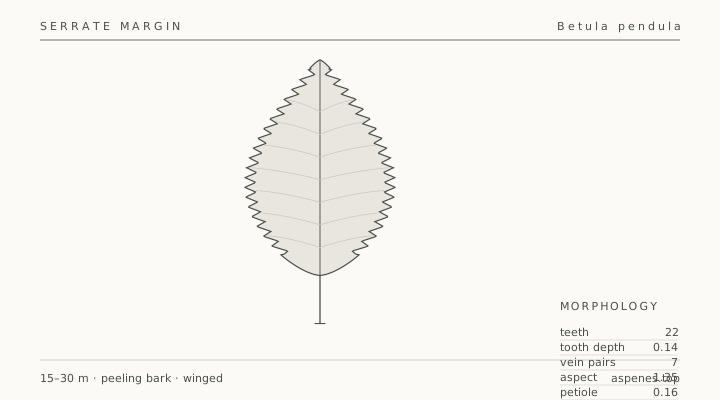
| Teeth along the margin | 22 |
|---|---|
| Tooth depth (fraction of half-width) | 0.14 |
| Vein pairs | 7 |
| Aspect (length ÷ width) | 1.35 |
| Petiole (fraction of blade length) | 0.16 |
The year, in four states

Spring Mar–May
Leaves appear in April on a haze of new growth, and the long male catkins that formed the previous autumn hang open and shed pollen. Birch pollen is the main cause of spring hay fever in northern Europe.

Summer Jun–Aug
The white trunk stands out sharply against green foliage. Birch grows fastest of almost any European tree in its first twenty years, then slows and dies young, seldom passing 90 years.

Autumn Sep–Nov
Leaves turn a clear light yellow for a fortnight in October and drop quickly, so birch woodland has a short, bright autumn window.

Winter Dec–Feb
The definitive view: white trunk, black diamond lenticels, drooping fine twigs. Dead white branches on the ground decay slowly and are the classic fire-lighting material in boreal regions.
Identify it in five steps
- Check the bark. White with black diamonds that peel in horizontal ribbons is silver birch; downy birch bark is duller grey-white and peels less.
- Look at the twigs. Silver birch has hairless twigs, and warty ones on young shoots; downy birch twigs are covered in fine down.
- Compare leaf shapes. Silver birch leaves are triangular with a long drawn-out point; downy birch leaves are rounder and shorter-pointed.
- Check the leaf stalk. Silver birch stalks are long and slender; downy birch stalks are short and hairy.
- Look at the growth habit. Drooping branchlet tips in a fan are typical of silver birch; downy birch branches are more upright.
Where it grows
Almost all of Europe and northern Asia, from Ireland to Japan and from the Arctic treeline south to the Mediterranean mountains. It is one of the first trees to appear after fire, clearfell or abandoned farmland.
Wildlife value
Birch supports over 300 insect species, more than any other northern European tree except oak and willow. The seeds feed siskins and redpolls in winter, and the bark is the winter food of beavers.